Gaussian Mixtures Models in Machine Learning
A Gaussian mixture model (GMM) is a probabilistic model that assumes that the instances were generated from a mixture of…
Code in a Better Way
A Gaussian mixture model (GMM) is a probabilistic model that assumes that the instances were generated from a mixture of…
Introduction Although most of the applications of Machine Learning today are based on supervised learning (and as a result, this…
The post discusses Kernel Principal Component Analysis (kPCA), highlighting its application in nonlinear dimensionality reduction and suggesting methods for selecting kernels and tuning hyperparameters through grid search and reconstruction pre-image error minimization.
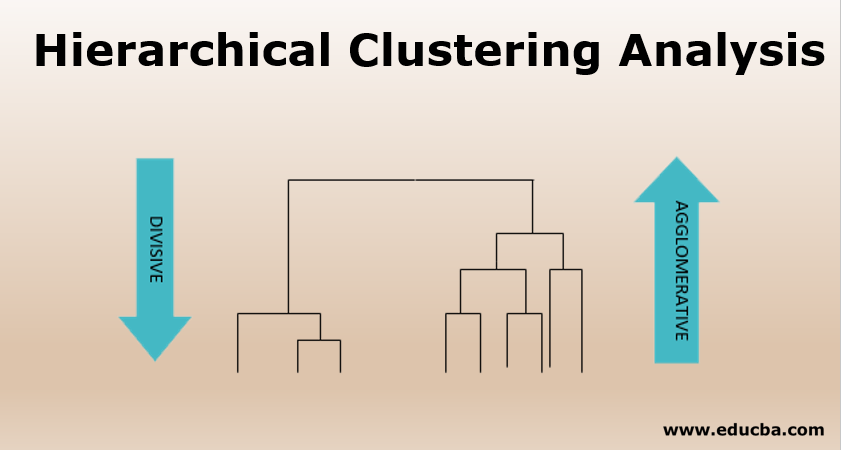
The content discusses K-Means and Hierarchical Clustering algorithms. K-Means requires predefined clusters and is sensitive to initial centroids and outliers. Hierarchical Clustering offers an agglomerative and divisive approach without preset clusters. The document also explores various linkage methods, dendrograms for visualization, and the validity of clusters over time.
The content discusses dimensionality reduction using PCA, emphasizing the importance of preserving a significant portion of variance, typically 95%. It explains how to compute PCA, options for variance preservation, and the benefits of compression on datasets like MNIST. Additionally, it introduces Randomized PCA and Incremental PCA for efficiency in handling large datasets.
This content discusses dimensionality reduction approaches, focusing on projection and Manifold Learning. It explains how projection simplifies high-dimensional data, exemplified by datasets like the Swiss roll. Principal Component Analysis (PCA) is highlighted as a key algorithm for preserving variance while reducing dimensions, with SVD as a method for determining principal components.
The text discusses the curse of dimensionality in machine learning, highlighting challenges in high-dimensional spaces. It suggests reducing features to improve training efficiency and visualization, while addressing potential information loss and risks of overfitting with increased dimensions. Dimensionality reduction techniques will be explored further.
Another very popular Boosting algorithm is Gradient Boosting. Just like AdaBoost,Gradient Boosting works by sequentially adding predictors to an ensemble,…
Introduction Boosting (originally called hypothesis boosting) refers to any Ensemble method that can combine several weak learners into a strong…
Unstructured data files consist of a series of bits. The file doesn’t separate the bits from each other in any…
As we have discussed, a Random Forest is an ensemble of Decision Trees, generally trained via the bagging method (or…
Introduction Storing data in local computer memory represents the fastest and most reliable means to access it. The data could…
A. Introduction to neural networksB. ANN architectures C. Learning methods D. Learning rule on supervised learning E. Feedforward neural network…
Introduction One way to get a diverse set of classifiers is to use very different training algorithms, as just discussed.…
Introduction: Welcome to our comprehensive tutorial on Ensemble Learning! In this guide, we’ll delve into the fascinating world of Ensemble…
Decision Trees are also capable of performing regression tasks. Let’s build a regression tree using Scikit-Learn’s DecisionTreeRegressor class, training it…
By default, the Gini impurity measure is used, but you can select the entropy impurity measure instead by setting the…
Introduction: Linear regression is one of the fundamental techniques in machine learning and statistics used for modeling the relationship between…
Like SVMs, Decision Trees are versatile Machine Learning algorithms that can perform both classification and regression tasks, and even multioutput…
Introduction As we mentioned earlier, the SVM algorithm is quite versatile: not only does it support linear and nonlinear classification,…